Showing posts with label science. Show all posts

The Clockwork Girl - Anna Mazzola

 58%

30.11.23

This obeyed the creative writing rules of conflict, pacing, engaging all senses and heaping misfortune on the protagonist, and was therefore an absorbing read. It was rather heavy handed on how bad life was for everyone - rich and poor - in 18th-century Paris, and, of course, especially for women. The characters were also a little vaguely drawn, being defined by one or two significant USPs, but it was an unusual take on an interesting period.

The Weather Woman - Sally Gardner


61%
27.08.23

Objectively, this novel could have been better. The author admits in her acknowledgements that it wasn't planned out, and that much is clear - it ambles along with little conflict, pacing or plot and is about 100 pages too long. Such books are usually character driven but all the characters are blandly, uncomplicatedly nice except for the two pantomime villains. Modern concerns are awkwardly shoved in - everyone, with their early 19th-century sensibilities, immediately accepting and understanding neurodiversity, climate change, sexual freedom, and queer and trans characters. Yes, we get it, they're born in the 'wrong time'. But, somehow, for all these flaws, it was still an evocative and engaging read.

Project Hail Mary - Andy Weir

59%

22.01.23

Beyond all the tediously detailed science (which I mostly skipped) and the ultimately pointless backstory (which I mostly skimmed), this is a sweet story about an unlikely inter-alien friendship that saves two worlds. I didn't warm to Weir's rather amateurish writing style, and would have liked to know much more about the journey to where they ended up, but it gets points for the lovely interactions between the two main characters.

Lessons in Chemistry - Bonnie Garmus


51%

01.01.23

This book is so popular that my library reservation took three months to come through in the form of an enormous hardback. But I might as well have stood in line to be hit over the head with it, so heavy-handed is its execution. So women were disrespected in the 1950s - we get the point but the descriptions are so exaggerated they fail to ring true. Apparently also children were Roald Dahl's Matilda, you could become a champion rower by reading, not rowing, dogs were basically people who couldn't speak and people were, including and especially the main character, unlikeable and entirely unsympathetic. 

Piranesi - Susanna Clarke

74%

07.01.21

This multi-textured modern fairytale/mystery/philosophical musing could have been pretentious and awkward. It mostly - miraculously - wasn't. I loved it as much as I did Strange and Norrell. I'd be surprised if I read anything else as good this year.
 

The Essex Serpent - Sarah Perry

70%
22.06.20

I'd been putting off reading this, partly because I wasn't all that keen on Perry's previous book, After Me Comes the Flood. But this was very different - rich and complex in all sorts of ways, with unusually detailed characterisation and an unusually modern take on Victorian Britain. I even liked the way it didn't wrap everything up neatly at the end (spoiler!).

Brazzaville Beach - William Boyd

54%
05.02.20

This confident book was so busy trying to be clever that it became confusing and ever-so-slightly dull. The cold and detached 'heroine' commands three separate narratives that are probably meaningfully linked if I felt engaged enough to analyse them.

Quiet - Susan Cain

61%
29.03.19

Amusingly, an extrovert relative bought me this from my Amazon wishlist, saying they didn't really understand it. I can see why it's a seminal work, and it is readable and interesting. I'm not sure, however, that it will influence how I think and behave - and the odd editorial decision to alternate male and female pronouns for examples, rather than using 'they', was annoying distracting.

Flowers for Algernon - Daniel Keyes

65%
15.01.19

A friend sent me this for Christmas, or I'd never have read it. And I'm glad I did, from an intellectual point of view at least. Despite being nearly 60 years old, it's a strikingly modern look at, well, everything - prejudice, culture, morality, academia, the nature of intelligence, sexual and emotional development, Freudian psychology... the term 'science fiction' seems rather limiting for this classic.

Fat for Fuel - Dr Joseph Mercola

59%
17.11.17

I'm starting to know quite a bit about this subject - enough to be critical of this book, anyway. While Mercola offers much good advice, he also made me laugh out loud with his suggestions of moving to Florida for the Vitamin D, adding ground eggshells and earth to smoothies, and walking on dewy grass for direct medical benefits. Oh, and constant promotion of a particular website he sponsors. It's that kind of thing that undermines the good science.

The Obesity Code - Dr Jason Fung

55%
24.09.17

This influential book can be summed up as 'Eating increases insulin, which makes you gain weight, so try fasting'. While I'm interested in the theory, some of the science quoted seems contradictory, and there's, surprisingly, no mention of the triggering/psychological aspects of not eating. At least it makes me want to do some more research.

Outliers - Malcolm Gladwell

61%
13.06.17

Yes, this is the famous '10,000 hours' book, and it makes that case engagingly, if not particularly convincingly. Basically, [spoiler!] success is a mixture of hard work and luck. And this book is a mixture of repeatable anecdotes and forgettable links.

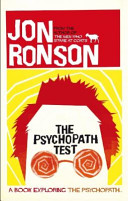
The Psychopath Test - Jon Ronson

62%
04.01.13

An entertaining hurtle through the nature of psychopathy, padded with insights into some aspects of "the madness industry". It's the sort of book that you read very fast, while boring whoever happens to be near with fascinating soundbites. It's also the sort of book that, on reflection, seems patchy, never getting to the heart of (or indeed anywhere near) the central hook: whether psychopaths actually run/ruin the world. The copy-editing was equally patchy, despite the long list of acknowledgements at the back.

Freedom - Jonathan Franzen

51%
29.08.11

'The Corrections' is a wonderful novel, clever and inspiring. 'Freedom' is clever too, its language masterfully controlled, but also angry, bitter, cynical, depressing. I'm all for an anti-hero but these characters were, without exception, so objectionable that it was impossible to empathise with their stories, sucking the humanity from them so that they became cyphers for Franzen's disillusionment. Yes, I read to learn, and many of its political points are painfully sharp, but it was a little like being lectured for 600 pages.

The Philosopher's Apprentice - James Morrow

62%
23.05.11

Another random choice from the library. The premise caught my eye: a conscience tutor is hired for a girl without one. The first section lived up to the promise - a distinct voice and an intriguing, satirical story. Unfortunately, once events moved beyond the initial defined world, the ideas weren't as convincing, and it ended up more as a political polemic than a satisfying novel. But marks for originality and brio.

Quirkology - Richard Wiseman

55%
12.04.10

The emphasis seems to be more on the "popular" than the "science" here, as some interesting (if mainly superficial) cultural concepts are explored with few convincing, substantiated conclusions.

Bad Science - Ben Goldacre

62%
17.01.09

An important, angry account of how science data is abused for audiences of non-scientists. Goldacre has an engaging journalistic style but his assumptions often come across as arrogance - but maybe the point is the mutual incomprehension of scientists and non-scientists.

Idoru - William Gibson

53%
27.05.05


Science fiction isn't really my thing, at least not the type that's packaged as such. Gibson's prose is poetic, but the effort to make futuristic technology look effortless means that the novel doesn't make a great deal of sense. The oddness isn't a bad thing but the confusion is.

As She Climbed Across the Table - Jonathan Lethem

 71%
29.12.04


This is refreshing - physics and metaphysics collide in a story told with near-scientific precision. Elegant and precise but with a complexity of layers - is nothing ever really nothing or is it everything?

A Short History of Nearly Everything - Bill Bryson

68%
31.10.04

An extraordinary piece of research and exaplanation, recasting science in terms of characters and emotion. The result is both fascinating and readable, although it's not always clear how accurate a particular statement might be. It's so carefully constructed that you'd think he'd credit his editor in the acknowledgements but it seems that, as usual, the heroic efforts of the backroom staff go unnoticed. Otherwise, fabulous.